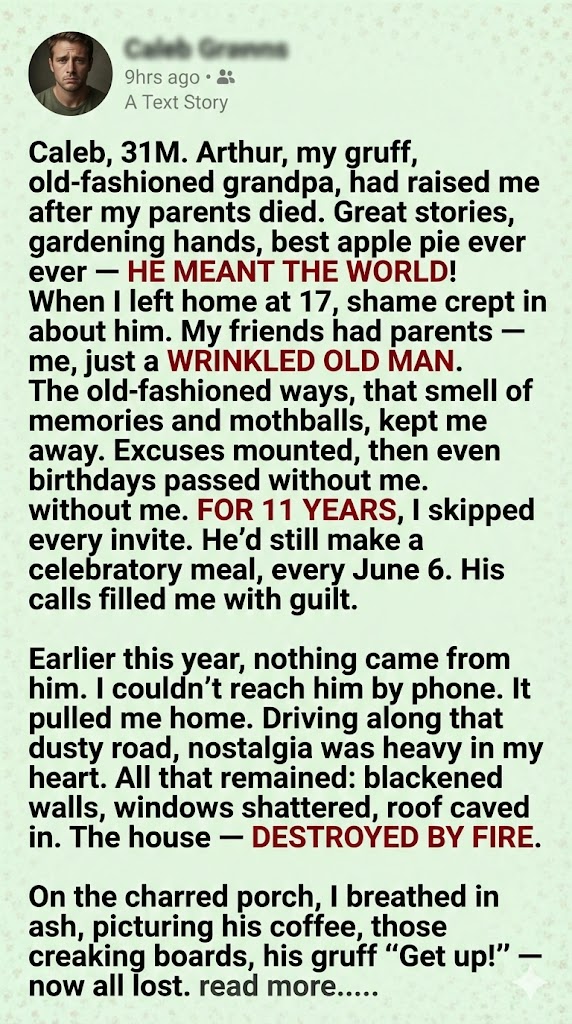
I stood there longer than I meant to, staring at the wreckage, trying to convince myself there’d been a mistake. That Arthur would step out of the trees any second, wiping his hands on his jeans, scolding me for showing up unannounced.
A neighbor recognized me. Said the fire had been fast. Electrical, maybe. Arthur had gotten out—but not before the smoke took something from him. He’d been moved to a care facility two towns over. No phone. No visitors, unless family showed up in person.
I drove there with my heart in my throat.
He was smaller than I remembered. Quieter. His hands—those hands that taught me how to prune roses and knead dough—trembled slightly in his lap. When he saw me, his eyes searched my face like he wasn’t sure I was real.
“Caleb?” he said. Just my name. Nothing else.
I broke.
I apologized for everything. For the years. For the silence. For being ashamed of the man who’d given up his life to raise me. Words poured out, messy and useless and late.
Arthur listened. Then he did what he always did—kept it simple.
“Thought you were busy,” he said. “Figured you’d come when you were ready.”
No anger. No guilt. Just room.
I visited every day after that. Brought apple pie from the bakery because I didn’t know his recipe anymore. We talked about nothing and everything. The garden he’d never replant. The stories I’d forgotten. The birthdays he’d celebrated alone.
On June 6, I cooked him dinner in the facility kitchen. It wasn’t perfect. He said it was “good enough,” which was his highest praise.
Arthur passed quietly a month later.
In his few saved belongings was an envelope with my name on it. Inside: a faded photo of us in the garden, dirt on my knees, his arm around my shoulders. On the back he’d written, “He always came back.”
I wish I’d come sooner.
But I’m grateful I came at all.