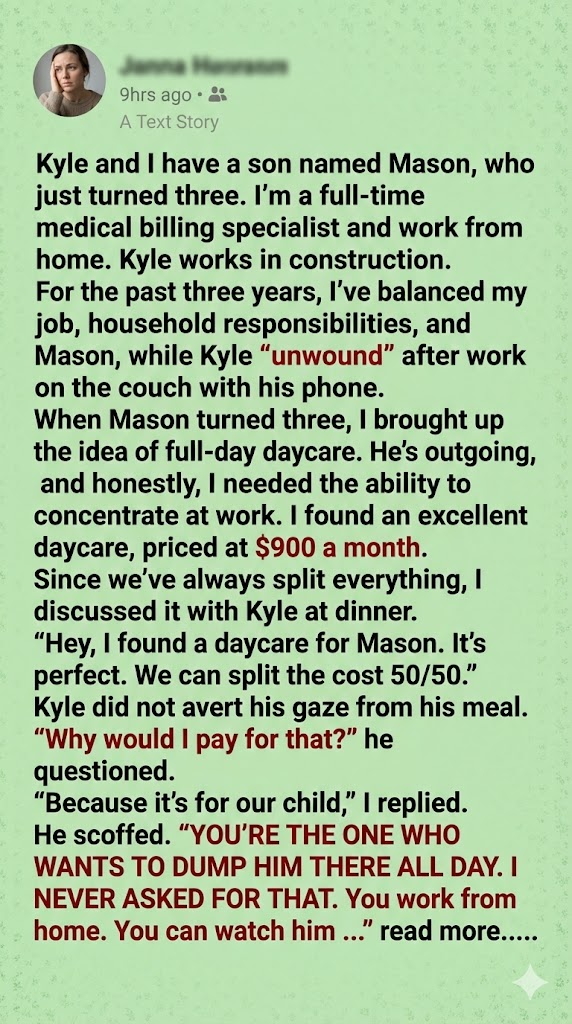
“You can watch him,” Kyle said, shrugging. “That’s what you’re home for.”
I stared at him, waiting for the joke. It didn’t come.
“I’m not home,” I said quietly. “I’m working. I’m on calls. I’m billing insurance. I can’t do that and chase a toddler all day.”
He rolled his eyes. “People have done it forever.”
“And people burn out forever, too.”
The conversation ended the way it always did — with me giving in. But something shifted. That night, after I put Mason to bed and logged back in to finish the work I’d been unable to complete during the day, I looked at my calendar. Missed deadlines. Half-done tasks. A warning email from my supervisor.
I realized something terrifying: if I lost my job, Kyle wouldn’t even notice until the bills didn’t get paid.
The next morning, I enrolled Mason in the daycare.
I didn’t ask permission.
When Kyle found out, he exploded. “You had no right!”
“I had every right,” I said. “I’m his parent too. And I’m paying my half.”
He laughed. “With what money? Mine helps keep this house standing.”
That’s when I handed him a printed spreadsheet. Three years of numbers. My income. The groceries I bought. The childcare I’d provided for free. The nights I stayed up working while he slept.
“You don’t help me,” I said evenly. “You benefit from me.”
Silence.
Mason started daycare the following Monday. He loved it. Came home singing songs, covered in paint, excited to show me new words. I started meeting my deadlines again. I slept.
Kyle sulked for weeks. Then he started staying late at work. Then later.
Eventually, he said, “I don’t like how things are now.”
“I do,” I replied.
We separated two months later.
Now, Mason goes to daycare during the week and spends his evenings with a mom who isn’t exhausted, resentful, or invisible. Kyle pays child support — including his half of daycare.
And for the first time, I’m no longer doing everything alone while pretending I have a partner.