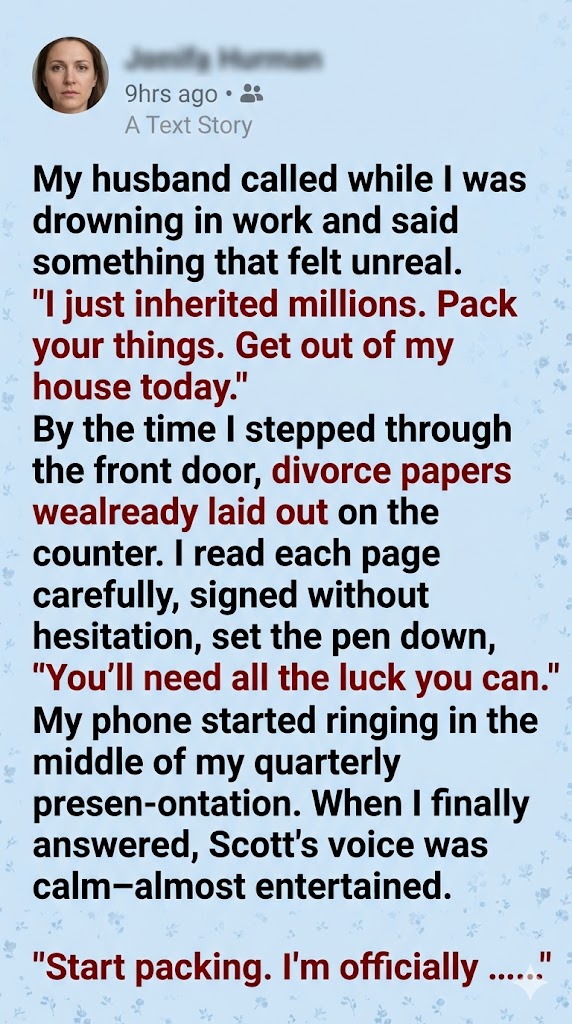
My phone started ringing in the middle of my quarterly presentation. When I finally answered, Scott’s voice was calm—almost entertained.
“Start packing. I’m officially a multimillionaire,” he said, the smugness radiating through the speaker. “My Uncle Arthur’s estate just cleared. Get out of my house today.”
I stood there in the empty conference room. My husband had called while I was drowning in work and said something that felt completely unreal. But by the time I drove across town and stepped through the front door of the home we’d shared for six years, the reality of the situation was sitting right in front of me. Divorce papers were already laid out on the kitchen counter, next to a pristine, unread stack of legal documents from the estate executor.
Scott was leaning against the fridge, swirling a glass of expensive scotch he’d clearly just bought on credit. “I had my lawyer draft them up an hour after I got the news. I’m taking the house, the cars, and my full inheritance. You keep your little 401k and whatever is in your checking account. Sign them, pack a bag, and leave.”
I didn’t argue. I didn’t cry. Instead, I read each page of the divorce settlement carefully. Scott had aggressively claimed sole ownership of all inherited assets, both current and future, explicitly waiving any right I might have had to his new fortune. He was so terrified I would try to take a piece of his pie that he completely severed my financial ties to him.
I signed on the dotted line without hesitation, set the pen down, and smiled.
“You’ll need all the luck you can get,” I told him, grabbing my coat.
Scott laughed, a cruel, echoing sound. “I don’t need luck, Elena. I have thirty million dollars in commercial real estate and offshore trusts. You’re walking away with a used sedan.”
What Scott didn’t know—what he was far too arrogant and impatient to research before claiming the estate—was why Uncle Arthur’s money was locked up in shell companies. Arthur wasn’t a brilliant business tycoon. He was a notorious fraudster. I knew this because the corporate accounting firm I worked for had recently been subpoenaed regarding the catastrophic collapse of Arthur’s primary holding company.
Scott hadn’t inherited thirty million dollars in liquid cash. He had inherited heavily leveraged, abandoned commercial properties plagued by toxic asbestos, alongside federal tax liens that dwarfed the value of the land.
Over the next six weeks, Scott aggressively pushed the divorce through the courts, demanding the judge expedite the process. I didn’t contest a single clause. I happily moved into a beautiful downtown apartment, secured my finances, and waited.
Two days after the ink dried on our final divorce decree, my phone rang. It was Scott.
“Elena,” he gasped. The smugness was entirely gone, replaced by raw, breathless panic. “They froze my bank accounts. The IRS… the EPA… there’s a federal lien on the properties! They’re saying I owe fourteen million dollars in back taxes and environmental cleanup fees!”
“Wow,” I said, leaning back on my new velvet sofa, taking a slow sip of my coffee. “That sounds like a massive liability for whoever owns that estate.”
“You have to help me! We were married! Your firm deals with corporate restructuring!” he pleaded, his voice cracking. “If I go down for this, they’ll come after you too!”
“We were married,” I corrected him gently. “But you insisted on taking sole ownership of the estate, and I signed the papers exactly like you asked. By legally separating our assets before you officially took possession of the trusts, I am completely shielded from your debts. You took out the trash for me, Scott.”
Dead silence fell over the line.
“I’m afraid my consulting fee is a bit out of your budget now,” I added. “Good luck packing.”
I hung up, blocked his number, and enjoyed the quiet.