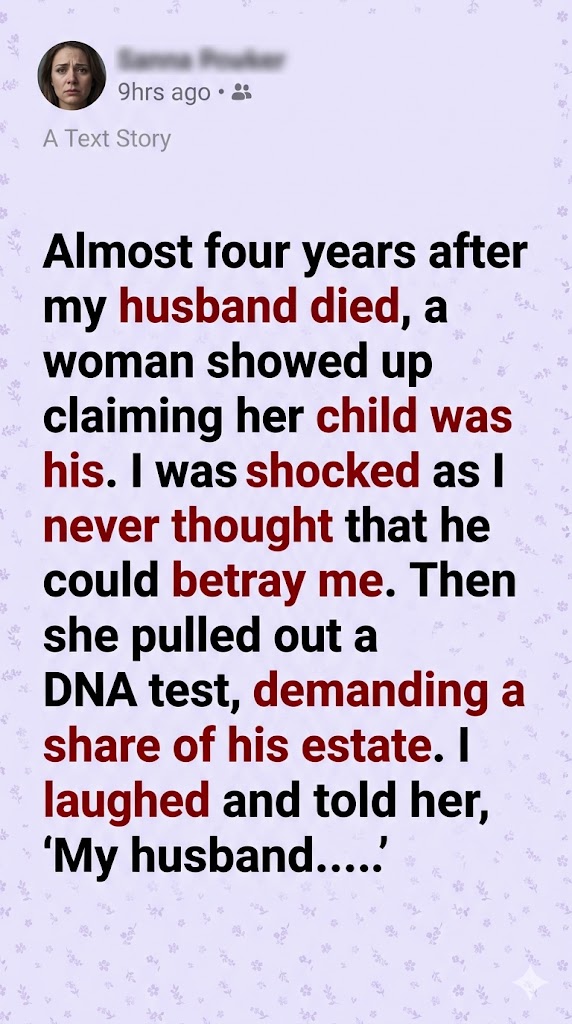
…was an anonymous sperm donor in his twenties.”
The triumphant smirk melted right off her face, replaced by a mask of pale confusion. The crinkled DNA paperwork trembled slightly in her manicured hand.
“Excuse me?” she stammered, her voice dropping an octave.
I took a sip of my coffee, feeling the initial wave of nausea and heartbreak completely wash away. For a terrifying sixty seconds, I had pictured my late husband, Arthur, living a double life. I had imagined him slipping away from our home to be with this woman, raising a child in secret while we struggled to conceive our own. But as I looked at the birth date on the paperwork she had so aggressively slammed onto my kitchen island, the math simply didn’t add up to an affair. It added up to a clinic in Boston, circa 2014.
“Before we met, Arthur was a medical student drowning in debt,” I explained, my voice steady and surprisingly calm. “To help pay for his tuition, he made regular donations to a fertility clinic. He was completely open with me about it when we got married. He helped dozens of families who couldn’t conceive on their own.”
The woman—who had introduced herself as Vanessa—swallowed hard. She glanced down at the little boy standing by her leg. He had Arthur’s hazel eyes and the exact same unruly wave in his dark hair. My heart softened for a fraction of a second at the sight of him, a living ghost of the man I loved, before hardening against the woman trying to use him as a pawn.
“This test proves he’s the biological father,” Vanessa insisted, though the fire had entirely left her eyes. “That means my son is entitled to a portion of the estate. I have a lawyer.”
“You might have a lawyer, but you clearly don’t have a case.”
I stood up, resting my hands on the cool marble counter. “When Arthur donated, he signed ironclad, legally binding contracts. Sperm donors are entirely absolved of any financial, legal, or moral obligations to the offspring produced from their donations. Conversely, those offspring have zero legal claim to the donor’s estate. I don’t know if you tracked him down through a commercial genealogy website or a data leak, but this little extortion attempt is over.”
Vanessa looked around my well-appointed kitchen, the reality of her failed gamble sinking in. She had likely seen the news of Arthur’s successful medical practice and subsequent passing, paid for a background check, and thought she had secured a permanent meal ticket.
“You’re just going to turn your husband’s flesh and blood away?” she tried one last tactic, her voice pitching into a desperate whine.
“I am turning you away,” I corrected gently. “Arthur gave you the greatest gift a person could ask for—the chance to be a mother. It is a profound shame that you are using that gift to try and shake down his grieving widow.”
I walked over to the front door and pulled it open, letting the crisp autumn air flood the entryway. “Please leave, Vanessa. And if you or your lawyer contact me again, my legal team will file charges for harassment and extortion.”
She snatched the DNA results off the counter, grabbed her son’s hand, and marched out the door without another word.
As the door clicked shut, the silence of the house settled around me once again. I walked into the living room and picked up the framed photograph of Arthur from the mantle. Instead of feeling betrayed, I felt a deep, overwhelming sense of pride. Even years after his death, I was still discovering the ways my husband had brought life into the world. I smiled at his picture, whispered a quiet thank you, and finally felt the heavy weight of the morning lift.